



ALERTCalifornia

PREPARE · RESPOND · RECOVER

Based at the University of California San Diego, ALERTCalifornia is a public safety program working to understand natural disasters and determine short and long-term impacts on people and the environment to inform management decisions.

ALERTCalifornia is a UC San Diego Program

VIEW LIVE CAMERA FEEDS

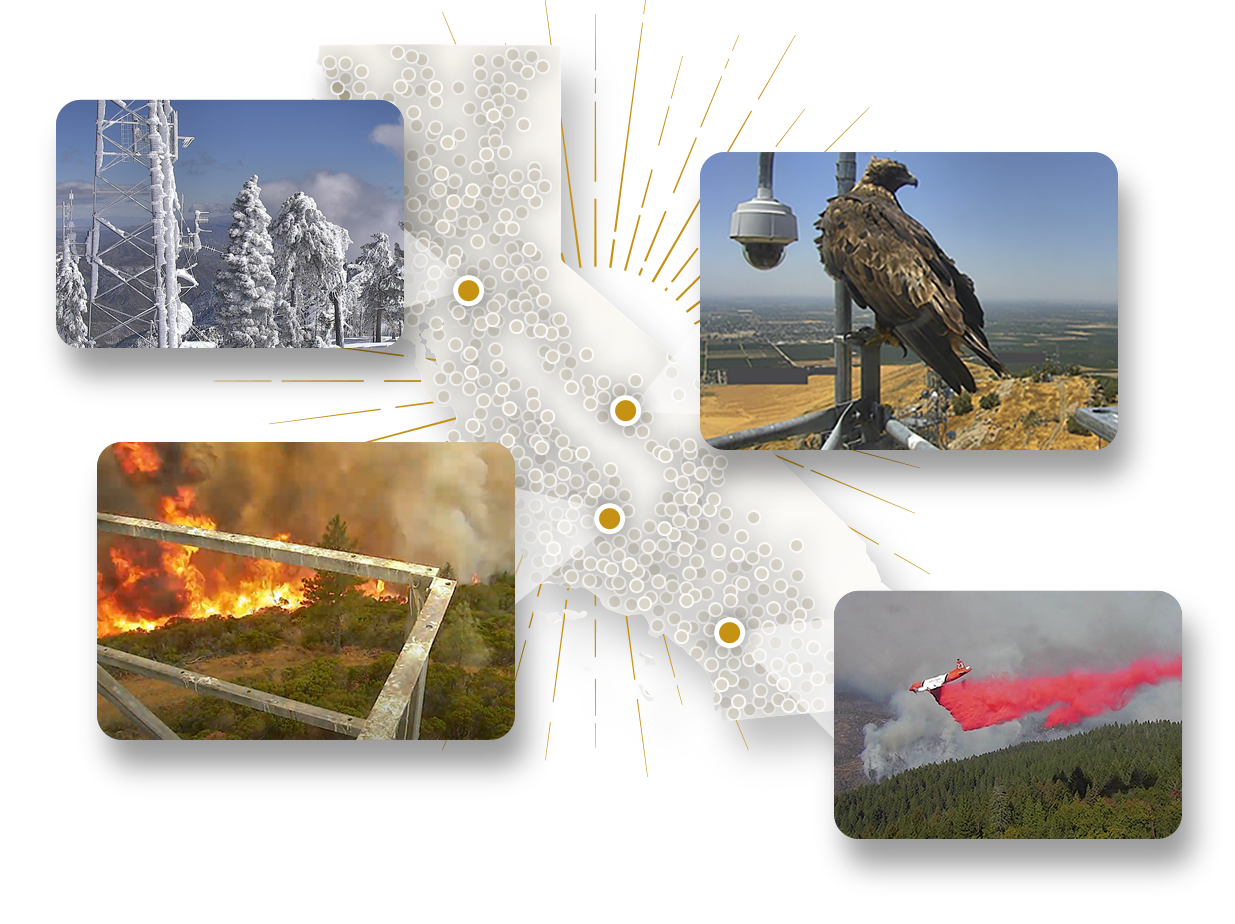
Cameras and sensorxs are deployed throughout California to monitor wildfires and disasters in real-time.

ALERTCalifornia has more than 1,200 high-definition, pan-tilt-zoom cameras deployed across California (as of February 2026), providing a 24-hour backcountry network with near-infrared night vision to monitor disasters such as active wildfires. ALERTCalifornia cameras can perform 360-degree sweeps approximately every two minutes and can view as far as 60 miles on a clear day and 120 miles on a clear night.

Explore our “camera quilt” to view live camera feeds and for more details on camera and network status.

icon-cameracount

1,200 cameras deployed
(as of February 2026)

PARTNERS

ALERTCalifornia is a UC San Diego program.

Interested in becoming an ALERTCalifornia partner? Learn more on our FAQs page.

Already a partner? Explore our Partner Resources page.

logo-ac-ucsd-01
microsoft-white
esri-white

NETWORK + TECHNOLOGY

ALERTCalifornia has an extensive, ever-expanding camera network in California. Researchers at UC San Diego have taken the lead in creating the cyberinfrastructure to process, store, manage and visualize the massive amounts of incoming data from these camera installations. Our discoveries help mitigate the impact of wildfires on people and property, and bolster research into how to best prepare and respond to wildfire threats, both before, during and after serious burn events.

As the ALERTCalifornia camera network and cyberinfrastructure grow in size and sophistication, UC San Diego researchers are using cutting-edge technology to gain insight into changing natural disaster patterns in the West. ALERTCalifornia provides state-of-the-art technology that supports data-driven decisions to prepare for, respond to, and recover from natural disasters.

vernon

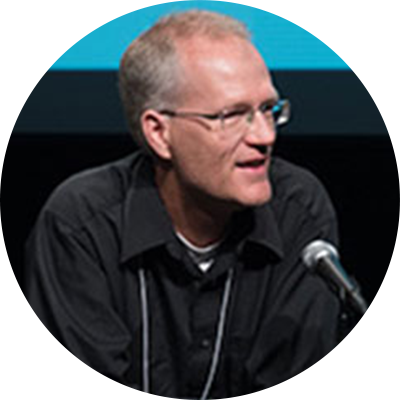
Frank Vernon

Co-Principal Investigator

Dr. Frank Vernon is co-PI for ALERTCalifornia and PI for the University of California’s High Performance Wireless Research and Education Network (HPWREN) program. HPWREN is a large-scale wireless high-performance data network that is being used for interdisciplinary research and education applications, as well as a research test bed for wireless technology systems in general.

Currently HPWREN provides wide area wireless internet access for ALERT California throughout southernmost California including San Diego, Orange, Los Angeles, Inyo and Riverside counties. Under ALERT California and HPWREN, research is being conducted on building “last kilometer” wireless links and developing networking infrastructure to capture real-time data from multiple types of sensors from seismic and GPS networks, hydrological sensors, oceanographic sensors, wildfire cameras and meteorological sensors.

team-falko-kuester

Falko Kuester

Co-Principal Investigator

Dr. Falko Kuester is co-PI for ALERTCalifornia and the Calit2 Professor for Visualization and Virtual Reality at the University of California San Diego and holds appointments as Professor in the Departments of Structural Engineering and Computer Science and Engineering at the Jacobs School of Engineering . He serves as the director of the Cultural Heritage Engineering Initiative , the Center of Interdisciplinary Science for Art, Architecture and Archaeology, the Calit2 Center of Graphics, Visualization and Virtual Reality (GRAVITY), and the UC San Diego DroneLab. Professor Kuester is working on methodologies and techniques for rapid infrastructure diagnostics and assessment, including diagnostic and analytical imaging and big-data visualization, providing engineers, scientists, first responders and stakeholders, with a means to create and explore large-scale digital twins of engineered systems intuitively and interactively. This research is also creating the foundation for the development of digital twins of large scale ecosystems and world cultural heritage sites and artifacts, providing a means for researchers, stakeholders, and the public alike to experience and study these artifacts and facilitate their preservation.

His vision for “Engineering a Future for the Past and Present” has helped create a catalyst for the development of disruptive technologies, including big-data analytics, deep learning, virtual reality and augmented reality, robotics/drones and layered manufacturing. The DroneLab explores drones for imaging on land, under water and in the air, for environmental and habitat monitoring, disaster and post-disaster reconnaissance, search and rescue, precision farming, general photography, cinematography, archaeology and the reconstruction of cultural heritage sites, among others.

Prof. Kuester received an MS degree in Mechanical Engineering in 1994 and MS degree in Computer Science and Engineering in 1995 from the University of Michigan, Ann Arbor and Ph.D. in Computer Science and Engineering from the University of California, Davis.

team-neil-driscoll

Neal Driscoll

Principal Investigator

Dr. Neal Driscoll is the principal investigator of the ALERTCalifornia program at the University of California San Diego, where he is a professor of geology and geophysics at Scripps Institution of Oceanography.

Driscoll’s background in natural hazard research traces back more than 35 years. He has published more than 120 manuscripts in high impact peer-reviewed journals, including Science, Nature Geoscience, Geology, and the Journal of Geophysical Research on subjects ranging from earthquake hazards to devastating wildfires., He has received multiple awards during his career, including the Heezen and Storke Awards for excellence in research and UC San Diego’s inaugural Undergraduate Teaching Award. Driscoll has also appeared in articles published by The Associated Press, The New York Times, CBS News, The Los Angeles Times, KGTV, KPBS and other notable news outlets.

Driscoll received his Ph.D. in geology and geophysics from Columbia University and worked as an associate research scientist at the Woods Hole Oceanographic Institution in Falmouth, MA before joining UC San Diego in 2000. His research interests at Scripps Oceanography include landscape and seascape evolution in response to tectonic deformation, sea-level fluctuations, climate, neotectonics, and geohazards.